Durga Puja and the Ichamati River ancient History
The Ichamati River at Taki in West Bengal holds a unique place in the story of Durga Puja. For generations, the people of Taki and the surrounding region have celebrated the festival with deep devotion, and the historic Taki Rajbari Puja is traditionally associated with a history of more than three centuries.
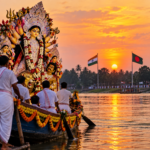
The most remarkable part of the celebration takes place on Vijaya Dashami. As the time for immersion arrives, beautifully decorated boats carry Durga idols onto the Ichamati River. The scene becomes especially meaningful because the river flows along the present-day India–Bangladesh border.
Before the Partition in 1947, the communities on both sides of the Ichamati belonged to the same broader cultural region. Although the creation of an international border changed the political landscape, many Bengali traditions and cultural connections continued across the region.
The Dashami immersion on the Ichamati has therefore become an important cultural tradition of Taki. Boats carrying the idols gather on the river, while people on the banks come together to witness the farewell to Goddess Durga.
Today, the immersion is conducted under applicable security and border regulations, but the tradition continues to remain an important part of Taki’s cultural identity.
During Durga Puja, the Ichamati becomes more than a river. It represents Bengal’s shared cultural heritage, history and traditions, bringing together memories of a region whose cultural bonds have continued across changing borders.